
Oral BPC-157 vs Injected: What the Research Actually Shows | Quantum Labs
BPC-157 capsules vs injection — why this peptide is unusual for oral delivery, what the research compares, and the format-choice framework for research protocols.
Why BPC-157 is the unusual peptide for oral delivery research
One of the most-searched questions in BPC-157 research is whether the compound can be taken orally rather than injected. The question matters because most peptides can't — digestive enzymes degrade peptides during gastrointestinal transit, so the active compound never reaches systemic circulation. BPC-157 is one of the rare exceptions: published research has documented oral bioavailability that's unusual for a peptide of its size, and the literature on oral vs injected administration is substantial enough to support meaningful comparison.
This article walks through what the research literature documents about oral BPC-157, how it differs from injected BPC-157 in research models, and how Australian researchers can think about delivery format choice. The framing throughout is research-grade laboratory work; for personal use questions, a qualified medical practitioner is the right referee.
Why BPC-157 survives the digestive tract
The honest answer rests on the compound's origin. BPC-157 — Body Protection Compound 157 — is a synthetic 15-amino-acid peptide derived from a sequence found in a larger protective protein originally isolated from human gastric juice. The parent protein evolved to function in the gastric environment, which means its active fragments are unusually stable in acidic and proteolytic conditions that would degrade most peptides.
Pre-clinical research has documented:
- Acid stability. BPC-157 retains activity under conditions mimicking human gastric pH (typically 1.5-3.5) for substantially longer than typical research peptides.
- Resistance to proteolytic degradation. The peptide is more resistant to pepsin, trypsin, and chymotrypsin (the major digestive proteases) than would be expected for a 15-amino-acid sequence.
- Documented oral bioavailability. Multiple rodent studies have used oral administration (gavage, drinking-water dosing) and produced measurable systemic and localised tissue effects. This isn't typical for peptides.
The stability properties are part of why BPC-157 attracted such substantial research interest in the first place — they're unusual enough to make the compound a methodologically interesting research tool.
What the research literature compares
Several published studies have run direct comparisons of oral vs injected BPC-157 in research models. The main findings:
1. Both routes produce measurable effects
Both oral and injected (subcutaneous, intraperitoneal) BPC-157 produce measurable outcomes in tissue-repair research models. The compound works through both routes.
2. Oral favours gut-localised research questions
Oral administration produces particularly high local concentrations in the gastrointestinal tract before systemic absorption. For research questions about gut barrier function, inflammatory bowel models, or related GI-localised research, oral delivery is the more mechanistically appropriate format.
3. Injected provides more predictable systemic levels
Subcutaneous or intraperitoneal injection produces more predictable plasma-concentration curves. For research designs where consistent systemic exposure matters — most tendon-repair and muscle-injury research designs, for example — injection has methodological advantages.
4. Onset and duration profiles differ
Injection produces faster peak plasma levels and a relatively brief active window. Oral produces slower ramp-up and somewhat extended exposure as the compound continues to be absorbed across the GI tract. Research designs targeting acute effect timing typically favour injection; designs targeting sustained tissue-level exposure can use either.
The format-choice framework
For Australian researchers designing BPC-157 protocols, the format-choice framework is:
- What tissue / system is the research question targeting? Gut-localised research → oral often preferred. Tendon, ligament, vascular research → injection is the standard format in published literature.
- What dose precision matters? Injection allows tighter dose-volume control. Oral introduces absorption variability that some research designs can tolerate and others can't.
- What duration of protocol? Long-running protocols (12+ weeks) often favour oral for injection-fatigue reasons, even when injection would be mechanistically preferable for the endpoint.
- What is the comparison literature using? If your research is designed to compare against published findings, using the same delivery format as the reference literature improves comparability.
What Quantum Labs supplies
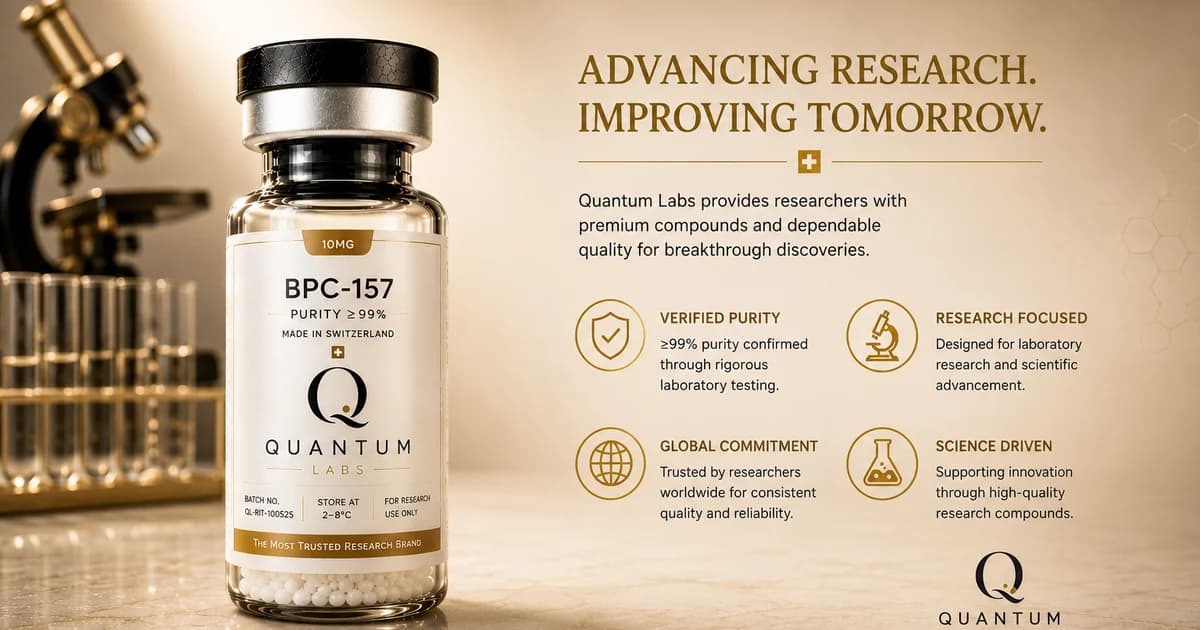
We supply BPC-157 as lyophilised powder in sealed vials — the standard research-grade format. Researchers reconstitute the powder with bacteriostatic water and use the resulting solution for either injected administration or for further formulation into oral research preparations as needed by their research design.
We don't currently supply pre-made BPC-157 capsules or tablets. The reason is regulatory: a finished oral dosage form (capsule, tablet, lozenge) is closer to a therapeutic finished product than the research-supply pathway typically covers. Suppliers offering “BPC-157 capsules” for purchase in Australia are usually either operating in a different regulatory framework (compounded pharmacy preparations, for example) or outside the standard research-supply pathway altogether.
The lyophilised research-grade format is the most regulatory-clear option for research applications, and gives researchers the flexibility to format the compound appropriately for their specific research design — including for oral research applications where their protocol calls for it.
Research-protocol reconstitution for oral use
For research designs using oral BPC-157, the practical handling differs slightly from injection-focused reconstitution:
- Diluent choice. For oral research, some protocols use sterile saline rather than bacteriostatic water — the bacteriostatic preservative (0.9% benzyl alcohol) has less utility for single-dose oral administration where the solution isn't stored multi-use.
- Working concentration. Oral dose volumes are typically larger than injection volumes because of the higher doses used to compensate for incomplete absorption. A 1 mg/mL working concentration is often more practical than the higher concentrations used for injection research.
- Administration timing. Most oral research protocols specify fasted-state administration — food in the GI tract complicates absorption kinetics and adds variability to the dose-response measurement.
For the general reconstitution mechanics, see our reconstitution guide. For dose-volume math, the peptide dosage calculator covers the working-concentration framework.
Other peptides that can be delivered orally
BPC-157 is the standout oral-delivery research peptide, but a few others have documented oral activity in research models:
- Glutathione has some documented oral bioavailability, though the absorption is much lower than injected administration. Research designs use both routes depending on the specific question.
- L-Carnitine is well-absorbed orally — it's the standard route for both research and the broader supplementary-use literature.
- NAD+ oral bioavailability is contested in research literature. Most aging-biology research uses either NMN (a precursor) or direct NAD+ injection for reproducible plasma levels.
For nasal-spray peptides (Semax, Selank, PT-141) which use a third delivery route, see our nasal-spray peptide article for the comparison.
Why most peptides can't be oral
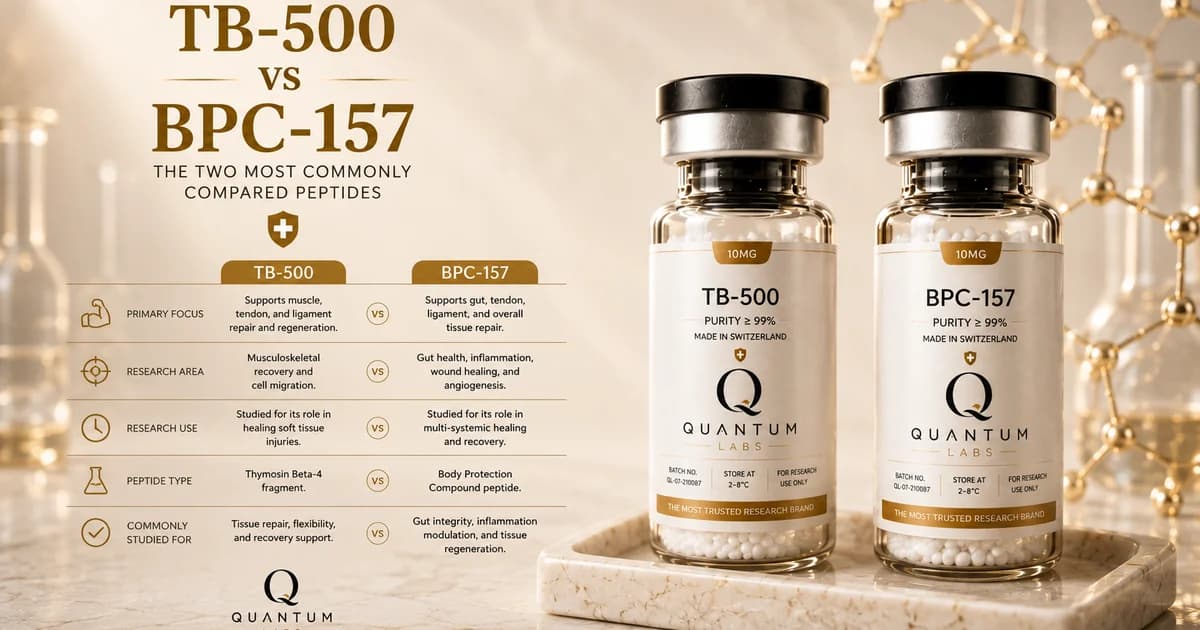
To contextualise: the reason BPC-157 is unusual is that most research peptides — TB-500, GHK-Cu, CJC-1295, Ipamorelin, Tesamorelin, MOTS-c, and so on — degrade quickly in the GI tract and produce minimal systemic activity when administered orally. The protein-digestion machinery is highly effective; peptide bonds are exactly what it's designed to cleave.
For non-BPC-157 peptide research, injection or intranasal delivery is the standard format. Workarounds exist (liposomal formulations, enteric coating, transmucosal delivery) but they're research-formulation problems rather than standard research-supply offerings.
Regulatory framing reminder
Research-grade BPC-157 is restricted for compounded human therapeutic supply in Australia but remains available for research and laboratory use without therapeutic representation. The research-supply pathway includes lyophilised material for researchers to format as needed for their research design — including for oral research applications.
Finished oral dosage forms marketed as therapeutic products (capsules, tablets sold for human use) sit outside the research-supply pathway and operate under different regulatory rules. Suppliers offering BPC-157 in those formats should be evaluated against the relevant regulatory pathway for their specific positioning.
Full coverage of the Australian regulatory framework in our peptide legality guide.
The honest position
Oral BPC-157 is the rare research-peptide format that actually has substantial research literature behind it. The compound's unusual stability properties make oral delivery a legitimate research option, particularly for gut-localised research questions. Injected BPC-157 remains the more common research format because dose control is better and the published literature is deeper on the injection side, but neither format is wrong — they answer different research questions in slightly different ways.
For Australian researchers designing BPC-157 protocols, starting from lyophilised research-grade material gives you the flexibility to format for whichever delivery route your specific research design requires. Full mechanism and research coverage in our BPC-157 research summary.
Research-grade BPC-157 from Australian stock. Lyophilised material, HPLC-verified to ≥99% purity, format for injection or oral research applications as your protocol requires. View BPC-157 in the catalogue →