
Thymosin Alpha 1 & the Thymosin Family in Immune Research | Quantum Labs
Thymosin Alpha 1 research — T-cell maturation, dendritic cell activation, viral infection adjunct studies. How it differs from Thymosin Beta 4 / TB-500.
The thymosin peptide family
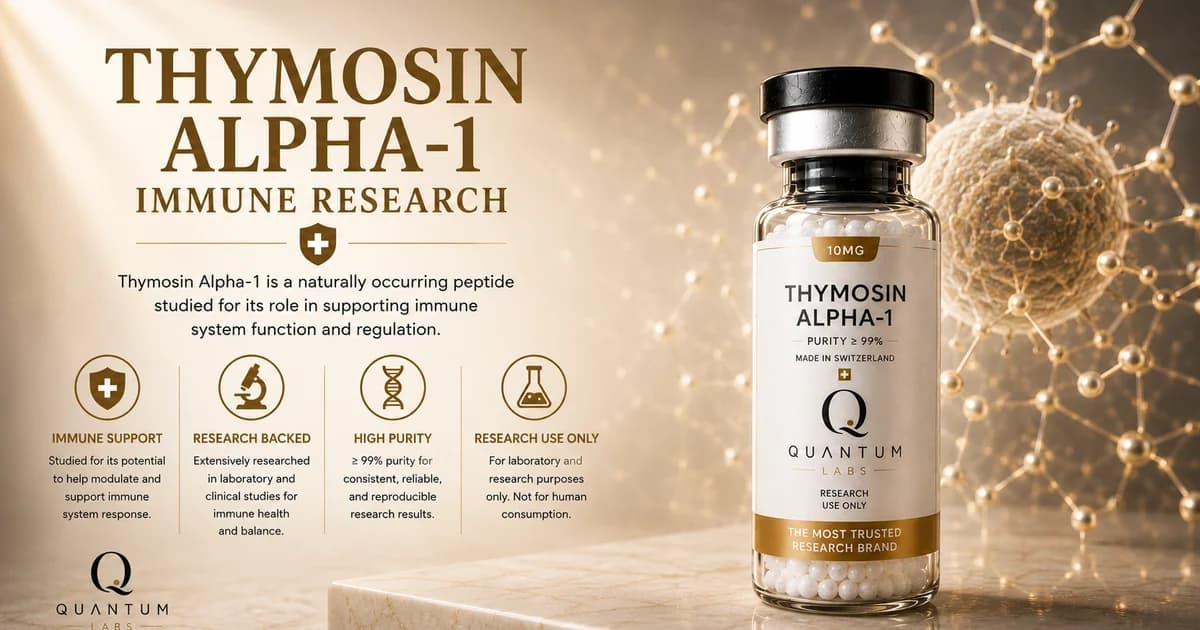
Thymosins are a family of small peptides originally isolated from the thymus gland in the 1960s. The thymus is the organ where immature T-cells mature into functional immune cells — the discovery of thymosins came from the search for the biochemical signals driving that maturation. Several thymosin peptides have since been characterised in detail, each with distinct biological activity and research applications. The two most-studied are Thymosin Alpha 1 (the immune-signalling thymosin) and Thymosin Beta 4 (the actin-binding thymosin, which is the source of TB-500).
This article focuses on Thymosin Alpha 1 and the broader immune-pathway research literature, with a side-trip into how TB-500 (the better-known Beta 4 fragment) relates. The framing throughout is pre-clinical research and laboratory study; clinical questions about thymosin-related therapeutic use should go to a qualified medical practitioner.
What is Thymosin Alpha 1?
Thymosin Alpha 1 (also written Tα1, TA-1, or Zadaxin in its therapeutic-pharmacy form) is a synthetic 28-amino-acid peptide identical to a naturally occurring fragment of prothymosin alpha. The peptide was first characterised in the 1970s and has since been studied extensively for its role in T-cell maturation, immune signalling, and broader immune modulation.
Key research characteristics:
- Sequence: 28 amino acids, naturally occurring in the thymus.
- Target system: The innate and adaptive immune system, with research focus on T-cell maturation and dendritic cell function.
- Approval status globally: Approved as Zadaxin (Thymalfasin) in several jurisdictions for specific immunology indications — chronic hepatitis B and C virus infections in some countries, and as an adjunct therapy in oncology contexts in others. Not approved as an ARTG-listed therapeutic in Australia.
- Australian status: Restricted for compounded human therapeutic supply. Available for research and laboratory use without therapeutic representation.
Mechanism in immune-pathway research
The most-cited mechanism for Thymosin Alpha 1 is modulation of T-cell function and dendritic-cell activation. Specific pathways examined in published research include:
Toll-like receptor signalling
Thymosin Alpha 1 has been shown to activate signalling through Toll-like receptors (particularly TLR-9) on dendritic cells in pre-clinical and ex-vivo research models. TLR activation is one of the foundational signals that bridges innate immunity to adaptive immunity by priming dendritic cells to present antigens to T-cells.
T-cell maturation and differentiation
Published research has examined Thymosin Alpha 1's effects on T-cell development, particularly the maturation of CD4+ helper T-cells and CD8+ cytotoxic T-cells. The mechanism is consistent with the peptide's natural role in the thymus.
Cytokine modulation
Pre-clinical and clinical research has documented effects on cytokine profiles — particularly increases in T-helper-1 (Th1) cytokines (interferon-gamma, IL-2) and a shift toward a more “cellular immunity” profile rather than the antibody-dominated Th2 response. This Th1 shift is the basis for the therapeutic interest in chronic viral infections, where Th1 immunity is needed to clear intracellular viruses.
Research applications in published literature
The bulk of Thymosin Alpha 1 research falls into four areas:
- Chronic viral infections. The largest body of human clinical data covers chronic hepatitis B and hepatitis C — Thymosin Alpha 1 has been studied as both monotherapy and adjunct therapy in multiple trials. The evidence base is what supports the Zadaxin approval in several jurisdictions.
- Oncology adjunct research. Multiple studies have examined Thymosin Alpha 1 as an immune-support compound alongside conventional oncology treatment, particularly in advanced melanoma and non-small cell lung cancer trials.
- Immune senescence research. Older populations have characterised declines in T-cell function and thymic output. Thymosin Alpha 1 research has examined whether the peptide can support immune function in this context — relevant to broader aging-biology research.
- Post-infection recovery research. The COVID-19 era generated substantial research interest in Thymosin Alpha 1 as a possible immune-modulator in viral illness, with several clinical trials examining its role during and after acute infection.
Thymosin Alpha 1 vs Thymosin Beta 4 (TB-500)
The two compounds share a name but are otherwise quite different:
Source proteins
- Thymosin Alpha 1: 28-amino-acid fragment of prothymosin alpha, naturally found in the thymus.
- Thymosin Beta 4: 43-amino-acid protein from a different gene family. Found throughout the body (not just the thymus).
Mechanism
- Thymosin Alpha 1: Immune signalling, particularly T-cell and dendritic-cell activation through TLR pathways.
- Thymosin Beta 4: Actin sequestration and cell migration — a cytoskeletal mechanism.
Research focus
- Thymosin Alpha 1: Immune-pathway research — viral infections, oncology adjunct, immune senescence.
- Thymosin Beta 4: Tissue-repair research — tendon healing, cell migration, angiogenesis. The TB-500 fragment (containing the active actin-binding domain) is the form most often used in this research.
The naming overlap is historical accident — both compounds were originally isolated from the same crude thymic extract in the 1960s, and the “thymosin” label stuck even after the mechanisms were characterised as completely distinct. Treating them as related compounds is a category error.
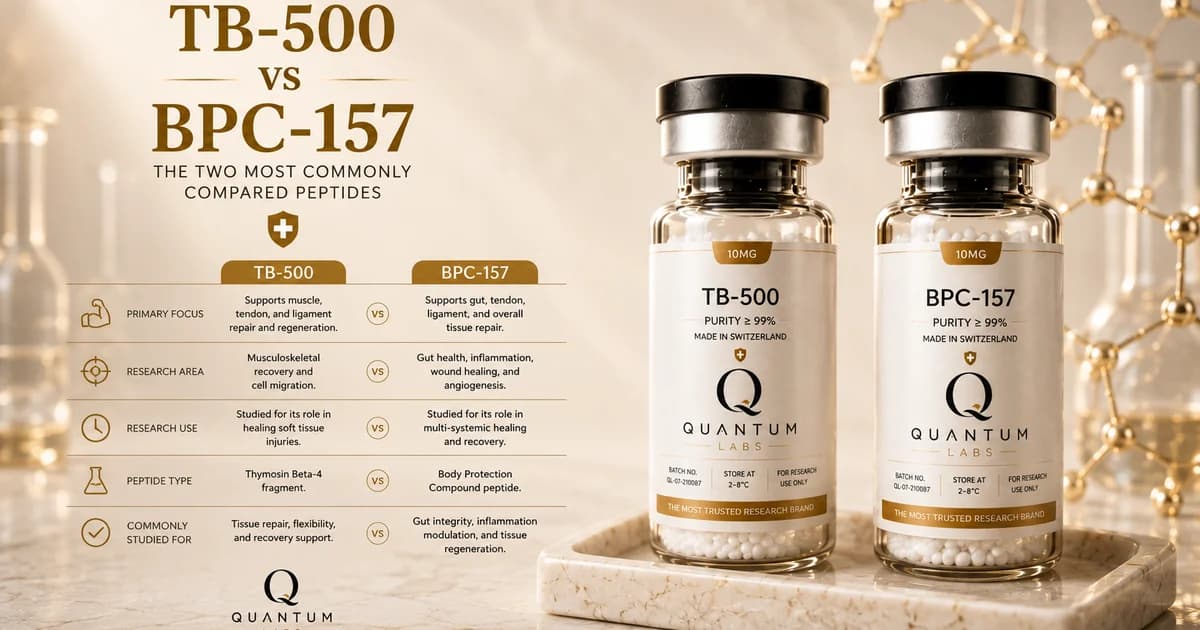
For coverage of the TB-500 / Thymosin Beta 4 fragment side, see our TB-500 vs BPC-157 article or the TB-500 product page.
Research dosing in published literature
Human clinical research on Thymosin Alpha 1 (driven by the chronic-hepatitis approvals) has used subcutaneous dose ranges in the 1.6 mg twice-weekly to 1.6 mg daily range depending on the indication. The half-life is short — around 2 hours — so research dosing patterns are typically frequent rather than sustained-release.
Pre-clinical and ex-vivo research uses much wider dose ranges depending on the experimental system. Researchers should reference primary literature for the specific research model under study.
Human therapeutic dosing in Australia is not established because Thymosin Alpha 1 is not an approved therapeutic here. The compound is supplied for research use only by research-pathway suppliers; for clinical applications, the appropriate channel is medical practitioners with access to the international approved formulations.
Safety in published research
Thymosin Alpha 1 has an unusually favourable safety profile across the published clinical trial corpus. The peptide is chemically identical to a naturally occurring human peptide, which limits immunogenicity concerns, and human clinical data spanning decades and tens of thousands of patient- exposures has not produced major safety signals beyond mild injection-site reactions and rare hypersensitivity events.
The favourable profile is one of the reasons the compound has continued to be studied in adjunct-therapy and immune- support research contexts despite never achieving first-line therapeutic approval for any specific indication in major Western markets.
For broader research-peptide safety discussion, see our peptide safety overview.
Australian regulatory frame
Thymosin Alpha 1 is not approved as a therapeutic in Australia. It is restricted for compounded human therapeutic supply under the TGA's framework but remains available for research and laboratory use when supplied without therapeutic representation. The regulatory category sits alongside the broader research peptide pathway discussed in our peptide legality guide.
What Quantum Labs currently supplies in the immune-pathway space
Thymosin Alpha 1 is not currently in the Quantum Labs catalogue. Our nearest stocked compounds for immune-adjacent research are Glutathione (intracellular antioxidant, supports redox biology relevant to immune function) and TB-500 (the actin-binding thymosin fragment — different mechanism to Alpha 1 but related research history).
We're evaluating whether to add Thymosin Alpha 1 to the catalogue. If you're an Australian researcher with a specific immune-pathway research need for the compound, contact us — customer demand is one of the factors that decides which compounds we stock.
The broader immune-peptide research landscape
Immune-pathway peptide research is a substantial but less public-facing area of the broader peptide literature. Beyond Thymosin Alpha 1, the immune research landscape includes:
- Other thymosin family members — Thymosin Alpha 11, Thymosin Beta 10, and several less-studied isoforms.
- Defensins and cathelicidins — natural antimicrobial peptides studied for their innate immune roles.
- Splenopentin (SP-5) — a 5-amino-acid peptide studied in immune-modulation research.
- BPC-157 immune effects — while BPC-157 is best known for tissue-repair research, several studies have examined immune-modulation effects as a secondary mechanism.
The immune-research area is one to watch as the broader field of immunomodulation peptide research expands.
Research peptides from Australian stock. For immune-pathway research, our nearest related compounds are Glutathione and TB-500. Browse the catalogue →