
Popular Peptide Stacks Explained: Wolverine, Glow, and More | Quantum Labs
Wolverine stack, Glow stack, and other named peptide combinations — the research-framework explanation for each, and the compounds that make them up.
The named peptide stacks researchers Google
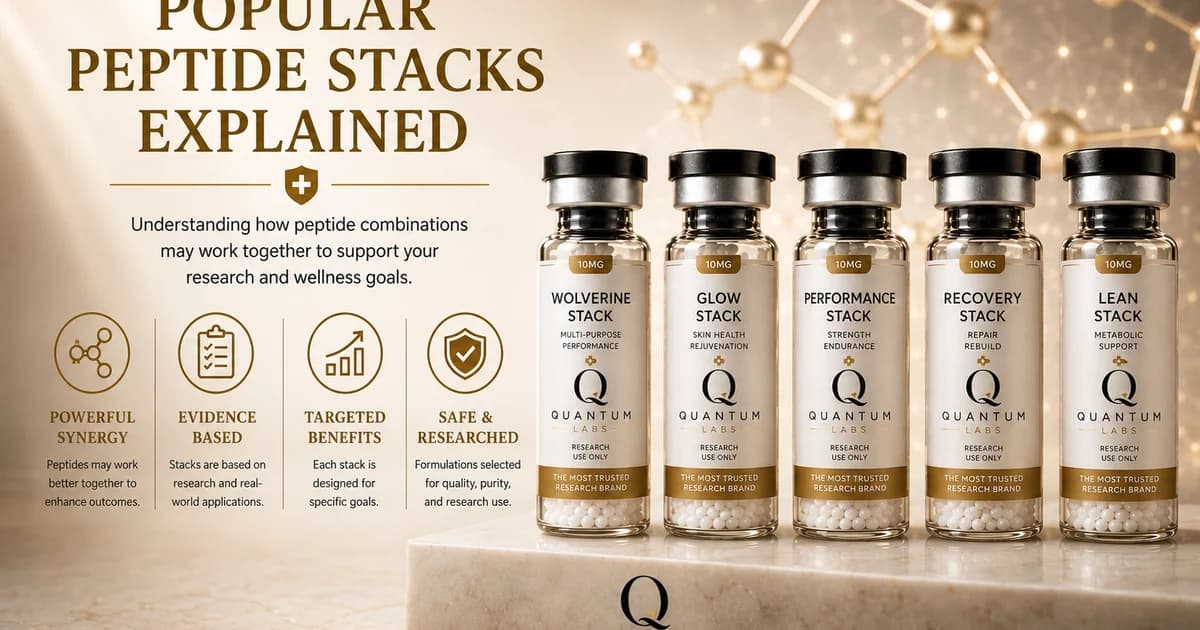
The internet has developed informal names for popular peptide combinations: the “Wolverine stack” for recovery-focused research, the “Glow stack” for skin and aesthetic-research framing, various performance-stack and longevity-stack combinations. These names come from biohacking and bodybuilding communities, not from peer-reviewed research literature, but the underlying combinations they refer to often map onto legitimate research-protocol design principles.
This article walks through the most-searched named stacks, translates the informal names into the research-peptide framework, and explains why each combination of compounds targets the research problem it's associated with. The framing throughout is research and pre-clinical literature; for personal use questions, a qualified medical practitioner is the right referee.
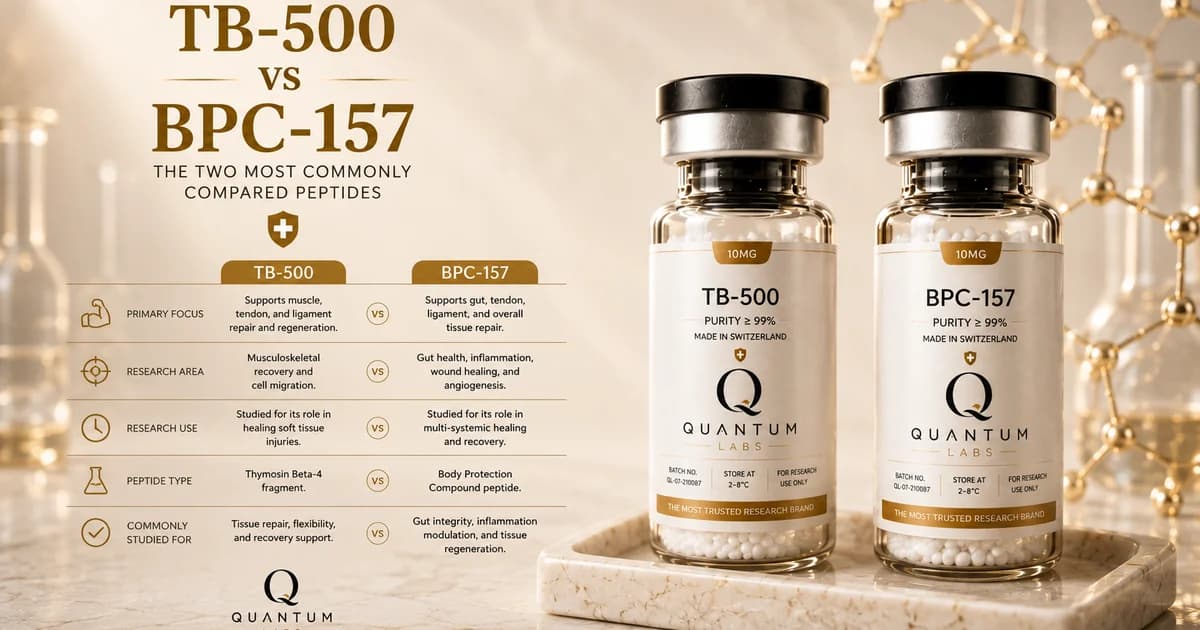
The Wolverine stack: BPC-157 + TB-500
The Wolverine stack is the most-searched named peptide combination in AU data (600 monthly searches across variants). The name comes from the comic character known for rapid healing, applied informally to the BPC-157 + TB-500 combination because both compounds are studied for tissue-repair acceleration in pre-clinical models.
The research-framework explanation: BPC-157 and TB-500 target complementary tissue-repair pathways. BPC-157 acts predominantly through nitric oxide and VEGF-driven angiogenesis; TB-500 acts on actin sequestration and cell migration. Combined administration in research designs is common precisely because the mechanisms are non-overlapping — the combined protocol covers more of the repair cascade than either compound alone.
For Australian researchers, the Wolverine stack corresponds directly to our BPC-157 + TB-500 research stack — two compounds pre-portioned together for paired research administration. Full mechanism coverage is in our TB-500 vs BPC-157 article and the broader research stack sits within the Recovery & Repair Stack protocol.
The Glow stack: dermal and aesthetic research peptides
The Glow stack (sometimes “K-Low stack” in some community variations) refers to combinations of peptides studied for dermal-collagen, hair, and broader aesthetic-related research outcomes. The specific compounds vary by community source, but the most-cited combination pairs GHK-Cu with one of the GH secretagogues, often with a dermal-repair peptide like BPC-157 or with a longevity peptide like Epithalon.
The research-framework explanation: GHK-Cu drives dermal collagen synthesis and extracellular matrix production directly. GH secretagogues (CJC-1295 + Ipamorelin) modulate the broader systemic anabolic environment in which collagen synthesis occurs. The two mechanisms are complementary rather than redundant — they affect dermal biology through different upstream pathways.
For Australian researchers studying this combination, the relevant compounds are:
- GHK-Cu — for dermal collagen and extracellular matrix research.
- CJC-1295 + Ipamorelin — for the systemic GH-axis modulation side.
- Glutathione — oxidative-stress support that some Glow-stack variants include.
We don't supply this as a pre-portioned stack — research designs studying dermal-aesthetic outcomes vary widely in which specific compounds they include, and the combination-versus-isolated study design depends on the research question.
Performance and endurance stacks
The most-searched performance-stack queries (best peptide stack for muscle growth, best peptide stack for muscle growth and fat loss) typically refer to combinations of GH-axis peptides with optional tissue-repair and metabolic-pathway compounds. The community framing varies, but the research-framework explanation is consistent: performance and endurance involve multiple physiological systems simultaneously, and stacked-compound research targets multiple pathways for combined-mechanism study.
The Quantum Labs Performance & Endurance Stack pairs:
- HGH — direct exogenous growth-hormone signalling.
- MOTS-c — mitochondrial peptide for cellular-energy research support.
- CJC-1295 + Ipamorelin — secretagogue pair for pulsatile GH-release research.
The combination covers anabolic signalling (HGH), mitochondrial output (MOTS-c), and pulsatile GH-axis modulation (CJC + Ipamorelin) — three different research pathways relevant to performance and endurance research questions. Full coverage of the GH-axis peptide family is in our GH peptides research guide.
Fat-loss stacks
Fat-loss combination research has accelerated alongside the incretin-receptor pipeline. The most-searched fat-loss-stack queries combine an incretin-receptor compound with a mitochondrial-pathway peptide and a foundational fat-oxidation cofactor.
The research-framework explanation: fat oxidation involves appetite regulation (central nervous system), cellular glucose-fat metabolic flexibility (mitochondria), and fatty-acid transport into mitochondria (carnitine system). Combining peptide-grade compounds covers more of this cascade than any single compound.
The Quantum Labs Fat Loss Protocol assembles:
- Retatrutide — incretin-receptor tri-agonist for the central appetite-regulation side.
- MOTS-c — mitochondrial-derived peptide for cellular AMPK and metabolic-flexibility research.
- L-Carnitine — fatty-acid transport cofactor for mitochondrial fatty-acid oxidation support.
Full coverage of the fat-loss compound landscape is in our fat-loss research article.
Cognitive and energy stacks
The cognitive-stack community framing typically combines Russian-developed nootropic peptides (Semax and Selank) with NAD+ or other cellular-energy support compounds. The research-framework explanation is mechanism-complementarity again: nootropic effects depend on both neuropeptide signalling and adequate cellular-energy supply to neurons. Combining a neuropeptide pair with a cellular-energy compound covers both sides.
The Quantum Labs Cognitive & Energy Stack assembles:
- Semax — nootropic heptapeptide from the ACTH lineage, intranasal delivery.
- Selank — anxiolytic heptapeptide from the tuftsin lineage, intranasal delivery.
- NAD+ — cellular redox cofactor for the mitochondrial-energy side.
Semax and Selank are routinely paired in published Russian and Eastern European research literature because they target complementary neurotransmitter systems (monoaminergic / BDNF for Semax; GABAergic for Selank).
Longevity stacks: aging-mechanism research
Longevity-stack research combines compounds targeting different aging hallmarks. The most-cited research combinations include:
- Epithalon — for telomere-maintenance research.
- NAD+ — for cellular-energy and sirtuin-axis research.
- SS-31 — for mitochondrial-targeted aging research.
- GHK-Cu — for dermal-aging and broader regenerative pathways.
Full coverage of the longevity peptide framework is in our anti-aging peptides research guide. The compounds aren't supplied as a pre-portioned stack because research designs in this area vary so widely in their endpoint focus — telomere research uses different compounds to mitochondrial-aging research, which uses different compounds to dermal-aging research. Combination designs are built around the specific research question.
Why named community stacks don't always match research literature
A note of caution. Named stacks like “Wolverine stack” or “Glow stack” come from biohacking and bodybuilding communities, not from peer-reviewed research. The actual compounds in a community-named stack can vary substantially by source, and the dose ranges frequently described in those communities differ from the dose ranges used in published research designs.
For researchers, the relevant questions are:
- What research pathway does the combination target?
- What does the published literature document about each compound's mechanism?
- What dose ranges has the research used, and how do those compare to community-suggested doses?
- What endpoints will the research design measure, and how will the data be interpreted?
The community-name framing is useful as a starting point — it identifies which compounds the broader user community finds interesting — but research designs need to be structured around the research question, not the community shorthand.
The complementarity rule across all stacks
A pattern emerges from all of the stack discussions above: the well-designed combinations target complementary pathways rather than redundant ones. Two compounds binding the same receptor produce receptor saturation, not additive coverage. Two compounds targeting different parts of a biological cascade produce broader coverage of the underlying process.
This is the core principle that makes peptide stacks informative in research. BPC-157 + TB-500 covers different repair-pathway mechanisms. CJC-1295 + Ipamorelin activates GH release through independent receptors. Retatrutide + MOTS-c + L-Carnitine covers different parts of the fat-oxidation cascade. Semax + Selank cover different neurotransmitter systems. The complementarity principle is what separates a well-designed research stack from an arbitrary combination of fashionable compounds.
For broader coverage of research-cycle and stack-design principles, see our peptide cycling 101 guide.
What we supply as stacks vs as individual compounds
Quantum Labs supplies five pre-portioned research protocols that map onto the most-studied stack combinations:
- Recovery & Repair Stack — BPC-157+TB-500 + GHK-Cu + Glutathione. The community-named “Wolverine-style” combination, structured as an 8-week research kit.
- Fat Loss Protocol — Retatrutide + MOTS-c + L-Carnitine, 8-week cycle.
- Performance & Endurance Stack — HGH + MOTS-c + CJC-1295+Ipamorelin, 10-week cycle.
- Cognitive & Energy Stack — Semax + Selank + NAD+, 6-week cycle.
- Hormonal Support Protocol — CJC-1295+Ipamorelin + Tesamorelin + HGH, 12-week cycle.
For research designs that don't match these standard combinations, every compound is available individually from the catalogue for custom protocol assembly.
Pre-portioned research stacks from Australian stock. Five protocols structured around the most-cited research-peptide combinations, all HPLC-verified to ≥99% purity. View the protocol library →